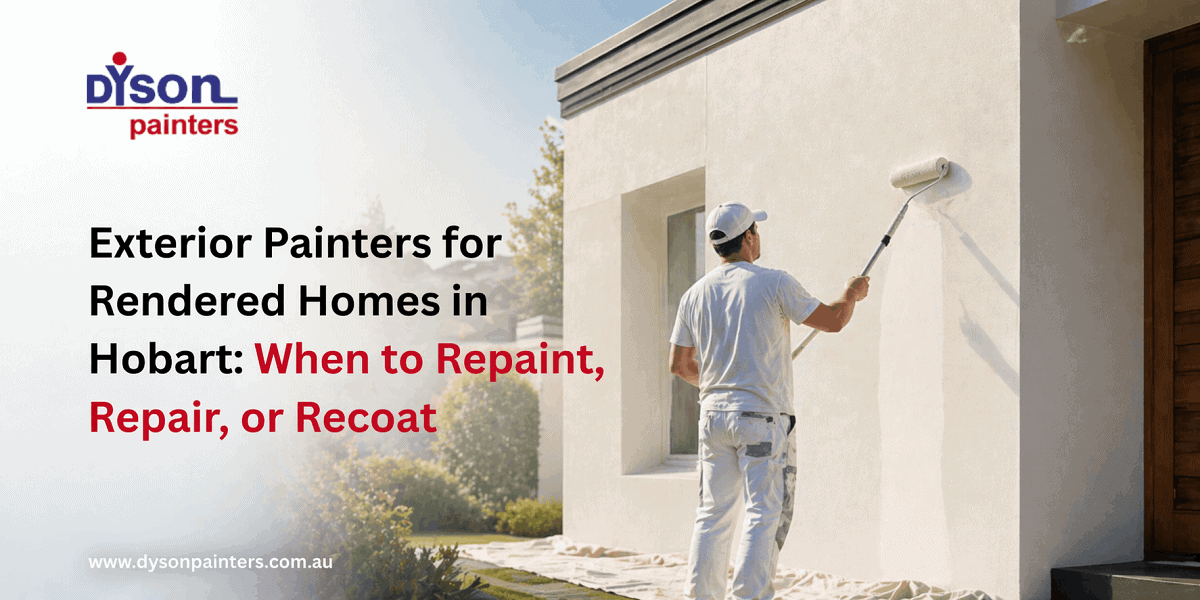
Rendered homes can look strong and low-maintenance from the street, but they often tell a different story up close. Hairline cracks, fading, chalking, stains, and peeling coatings can all point to different problems, and not all of them need the same fix. That is where experienced exterior painters make a real difference. In Hobart, changing weather, regular rain days, and exposed walls can shorten the life of exterior coatings if the surface is not assessed properly first. For many homeowners in Hobart, Sandy Bay, Bellerive, Glenorchy, and Kingston, the real question is not just whether to paint, but whether the surface needs repainting, repairs, or a full recoating system.
What Makes Rendered Homes Different for Exterior Painters in Hobart?
Render is not the same as timber weatherboards, plain brick, or fibre cement cladding. It is a mineral-based exterior surface that can be porous, prone to fine movement, and sensitive to trapped moisture if the wrong paint system is used. That is why exterior painters approach rendered walls differently from many other exterior surfaces.
A rendered wall may look only slightly faded, yet still have hidden coating failure, patchy porosity, or moisture-related issues underneath. Australian render-paint guidance consistently notes that rendered walls need the right surface preparation, curing, and coating choice, not just a fresh topcoat.
Some high-build membrane or elastomeric systems are specifically designed to handle minor cracking better than standard exterior paints, while fresh render often needs adequate curing time before paint is applied.
In Hobart, that matters even more. The Bureau of Meteorology shows Hobart gets regular rainfall across the year rather than a short, intense wet season, which means coatings are repeatedly exposed to moisture cycles rather than only occasional heavy rain. That repeated wetting and drying can make existing defects more obvious over time.
When Do Exterior Painters Recommend Repainting a Rendered Home?
Sometimes a repaint is enough. This is usually the case when the render itself is sound and the existing coating has mostly cosmetic wear rather than system failure.
A repaint may be the right choice when you notice:
- Fading or loss of colour depth
- Mild chalking on the surface
- A tired, uneven look
- Slight patchiness from age
- No major moisture staining
- No widespread cracking
- No peeling across large areas
This is where professional house painters can save homeowners from over-spending. Not every rendered home needs a full coating rebuild. If the wall is stable and the existing system is still performing, a properly prepared repaint can restore appearance and protection without turning the project into unnecessary repair work.
That said, repainting should never mean simply covering over the problem. Experienced exterior painters inspect how well the old coating is adhering, whether the surface is powdery, and whether cracks are isolated or recurring. If the base is not sound, a repaint alone will usually be a short-term cosmetic fix rather than a long-term solution.
When Do Exterior Painters in Hobart Recommend Repairs Before Painting?
Common signs include:
- Hairline cracks around windows, doors, or corners
- Isolated bubbling or blistering
- Previous patch repairs standing proud or sinking back
- Small sections of flaking paint
- Local water staining
- Surface defects that create an uneven finish
This stage is where many DIY jobs go wrong. Homeowners often assume cracks are just cosmetic, but cracks can signal movement, moisture entry, or failure in an earlier patch repair. Minor cracks may be treatable with the right preparation and crack-bridging system, but larger cracks or recurring cracks should be properly assessed before they are painted over. Australian exterior rendering and coating guidance also warns that previously painted render needs cleaning and assessment before cosmetic treatment, and that larger cracks may point to movement that needs further investigation.
For rendered homes in Hobart suburbs such as Kingston and Bellerive, moisture around exposed elevations, rooflines, and openings can worsen these issues. A professional repair-and-paint approach does more than improve the look of the wall. It helps reduce the chance of early coating failure.
When Is a Full Recoat the Smarter Option for Rendered Homes?
A recoat is usually the better option when the old system is failing across a broader area rather than just in a few isolated patches. This is different from a standard repaint. It usually means the surface needs more preparation, more system correction, and more careful product selection.
A full recoat may be the better choice when:
- The surface is heavily chalking
- Coating failure is widespread
- Cracks are visible across multiple elevations
- The wall has repeated paint failure after earlier repainting
- Moisture issues have affected adhesion
- The old system is no longer protecting the render properly
This is where exterior painters need to think about performance, not just appearance. High-build membrane and elastomeric coating systems are commonly used on render and masonry because they offer better flexibility, can bridge minor cracks, and can still allow moisture vapour movement when specified correctly. Australian product guidance for rendered walls specifically highlights crack resistance, moisture management, and vapour permeability as important parts of long-life exterior performance.
For a Hobart homeowner, a proper recoat can be the more cost-effective decision when the alternative is repainting over a surface that is already failing.
The Process Professional House Painters Use on Rendered Homes in Hobart
The best results on render come from process, not speed. Over 50 years of local painting experience teaches one lesson clearly: if the preparation is wrong, the finish rarely lasts.
1. Surface Inspection
Good exterior painters begin by checking the condition of the render, the existing paint film, signs of moisture, crack patterns, and any previous repairs. This first step decides whether the job is a repaint, a repair-and-paint project, or a recoat.
2. Cleaning and Preparation
Rendered walls often collect dirt, salts, mould, and loose material. Cleaning is essential before any coating work begins. On previously painted render, proper washing and removal of unstable material improves adhesion and reveals the true condition of the wall underneath.
3. Crack and Defect Repair
Minor cracks may be filled and treated as part of the preparation stage. Local defects are repaired so they do not telegraph through the new coating. If cracks suggest larger movement, further assessment is the smarter next step before painting continues.
4. Priming or Sealing Where Needed
Some rendered surfaces need stabilising or sealing before topcoats are applied. This can help manage porosity and support more even finish performance.
5. Applying the Right Coating System
This is where experience matters most. A sound surface may only need a suitable exterior paint system. A more stressed or cracked wall may need a membrane or elastomeric approach. The goal is not to sell the most complex option every time. It is to match the coating system to the condition of the home.
For homeowners in Glenorchy, Sandy Bay, and across Hobart, this kind of methodical process is what separates lasting work from short-lived cosmetic improvement.
How Often Should Rendered Homes Be Repainted in Hobart?
There is no honest one-size-fits-all answer. The repaint cycle for a rendered home depends on exposure, earlier workmanship, moisture control, the quality of the previous paint system, and how early maintenance issues are addressed.
Homes may need attention sooner when they have:
- Strong sun on one side and prolonged damp on another
- Older coating systems with visible chalking
- Coastal or wind-exposed conditions
- Poor earlier patch repairs
- Recurring cracking
- Drainage or moisture issues near walls
Hobart’s climate averages show steady year-round rain days and meaningful annual rainfall, while exposed areas can also experience significant wind. That combination matters because exterior coatings are not only dealing with UV and appearance fade. They are also dealing with movement, surface moisture, and repeated weather exposure over time.
That is why the smartest approach is not waiting for major failure. Homeowners usually spend less when they act while problems are still local. A small repair and repaint is generally easier to control than a large-scale recoat after several seasons of ignored cracking or trapped moisture.
What Affects the Cost of Repainting or Recoating a Rendered House in Hobart?
Cost depends less on the idea of “painting a wall” and more on the condition of the wall before paint goes on. For rendered homes, the biggest pricing factors usually include:
- Total surface area
- Height and access requirements
- Amount of prep work needed
- Crack repair requirements
- Extent of coating failure
- Whether local repairs or a full recoat is needed
- Product system selected
- Site conditions and scheduling
This is why exterior painters do not give meaningful advice based on square metres alone. Repainting a sound rendered wall is a different job from restoring a façade with moisture staining, old failed coatings, and widespread cracking.
It is also why the cheapest quote is not always the best value. A lower price can come from skipping preparation, under-specifying the coating system, or treating cracks as a quick filler job rather than a performance issue. On render, that can show up quickly once the weather cycles through another wet and dry period. Australian coating guidance for rendered surfaces repeatedly highlights the importance of correct specification and film build, especially in exposed environments.
If you want clarity, the best step is a site inspection. Dyson Painters can assess whether your rendered exterior in Hobart needs repainting, repairs, or a full recoat before providing a recommendation and quote.
When Should You Call Professional House Painters Instead of Doing It Yourself?
Rendered walls are less forgiving than they look. A DIY repaint can seem manageable until patch repairs flash through the finish, cracks reopen, or the new paint struggles to bond properly.
You should call professional house painters when:
- Cracks keep returning
- Stains or bubbling are spreading
- Older paint is peeling unevenly
- The surface feels powdery
- Previous repairs are obvious
- You are preparing the home for sale
- You are unsure whether the problem is cosmetic or deeper
This is especially true for older properties in Hobart and nearby suburbs where movement, moisture, and past maintenance can all interact. In some cases, what looks like a paint problem is really a moisture-management or substrate problem. Painting over that rarely ends well.
With Dyson Painters, homeowners benefit from over 50 years of local experience, practical surface assessment, and advice shaped by real Hobart conditions rather than generic painting checklists.
Why Hobart Homeowners Choose Dyson Painters for Rendered Exterior Work
Homeowners do not just need someone who can apply paint. They need exterior painters who understand what rendered walls need before painting starts.
Dyson Painters brings:
- Over 50 years of painting experience
- Local knowledge across Hobart, Sandy Bay, Bellerive, Glenorchy, and Kingston
- Careful inspection before quoting
- Practical advice on repainting, repairs, or recoating
- A focus on preparation and long-term finish performance
- Experience with local exterior conditions and exposed homes
FAQs About Exterior Painters for Rendered Homes in Hobart
1. How do I know whether my rendered home needs repainting or repairs?
If the wall is only faded or mildly chalky, repainting may be enough. If you can see cracks, bubbling, patchiness, or moisture staining, repairs should usually come first.
2. Can exterior painters paint over cracked render?
Minor cracks can often be treated as part of the preparation process, but recurring or larger cracks should be assessed properly before coating. Painting over them without diagnosis often leads to early failure.
3. How often should rendered homes be repainted in Hobart?
It depends on exposure, previous coating quality, moisture conditions, and how well earlier maintenance was handled. A professional inspection is the best way to judge timing.
4. What is the difference between repainting and recoating a rendered wall?
A repaint usually means applying a fresh coating over a sound surface after normal preparation. A recoat usually involves a more corrective system because the older coating is breaking down or the wall needs more than a cosmetic refresh.
5. How much does it cost to repaint a rendered house in Hobart?
There is no single fixed price. Costs depend on wall condition, crack repairs, access, and the coating system required. Dyson Painters can provide a site-based quote for a more accurate answer.
Painters in Hobart You Can Count On for Rendered Home Exteriors
If you are looking for painters in Hobart homeowners trust for rendered exterior work, Dyson Painters is ready to help. Repainting rendered walls is not just about fresh colour. It is about knowing whether the surface needs preparation, crack repairs, sealing, or a full recoating system before any paint goes on. That is where experience matters.
With over 50 years of painting experience, Dyson Painters delivers practical advice, careful surface assessment, and high-quality workmanship tailored to Hobart conditions. Whether your rendered home is showing fading, patchy repairs, or signs of coating failure, our team can recommend the right solution for lasting results. We work across Hobart and nearby suburbs, including Sandy Bay, Bellerive, Glenorchy, and Kingston.
Contact Dyson Painters at 0420 213 214 or send us email to
admin@dysonpainters.com.au for a free quote and speak with local professionals who understand what your exterior really needs.