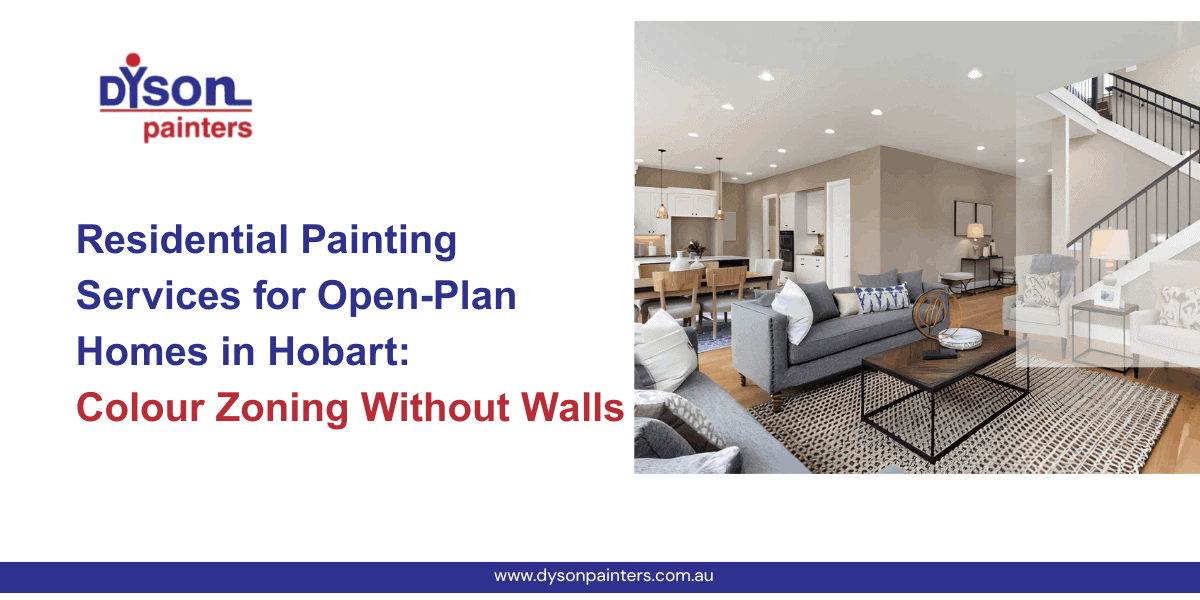
Open-plan living is popular in Hobart because it makes homes feel brighter, more social, and more spacious. The challenge is that one large connected area can also feel flat, busy, or visually undefined if every zone looks exactly the same. That is where residential painting services make a real difference. With the right colour plan, a skilled house painting company can create clear visual zones for living, dining, and working spaces without adding walls. At Dyson Painters, our house painters team in Hobart brings over 50 years of local experience to projects like this, helping homeowners get structure, flow, and style in one connected interior.
What Colour Zoning Means Open-Plan Homes
Colour zoning is the use of paint to visually separate one area from another inside a connected layout. Instead of building physical barriers, the paint scheme gives each space its own purpose while keeping the whole home cohesive. Paint and design sources describe this approach as a way to bring structure, flow, and harmony to open-plan rooms. And Dyson Painters has already highlighted it as an effective way to create visual boundaries in open floor plans.
In a Hobart home, this might mean using one soft neutral across the main living area, then shifting to a slightly deeper tone around the dining space or study nook. The result is a subtle separation without making the room feel chopped up. That balance matters in open-plan layouts because the eye still needs one continuous visual story as it moves from zone to zone.
Why Does This Work So Well for Modern Family Living
Open-plan homes work best when each area feels intentional. A living zone should feel relaxed, a dining zone should feel distinct, and a kitchen zone should still connect to the whole space. Colour zoning helps achieve that without changing the floor plan, which is why it has become such a useful tool for interior painters and design-focused homeowners.
Why Light Changes How Paint Colours Look
Hobart homes do not all receive the same light. Orientation, window size, ceiling height, and the surrounding streetscape all affect how a colour reads on the wall. Tasmanian home design guidance shows how north-facing living areas can capture generous daylight, which makes colour choice and placement especially important in rooms that stay visually connected for most of the day. Interior paint guides also note that natural light can significantly change how a paint colour appears, which is why sample testing is so important.
This is especially true across Sandy Bay, Bellerive, Glenorchy, and Kingston, where some homes enjoy bright, open living spaces while others have darker interiors or deeper room layouts. In a bright room, cooler tones can look sharper than expected. In a darker room, those same tones can feel flat. A professional house painting company understands how to read those differences before the first coat goes on.
The Practical Rule for Colour Testing
The best approach is to test large samples on different walls and check them in morning light, afternoon light, and artificial evening light. Industry guidance consistently recommends this because colour can shift noticeably across the day. That single step prevents many of the mistakes homeowners make when they choose colours from a swatch only.
Best Ways to Zone an Open-Plan Home Without Walls
The strongest colour zoning plans usually rely on restraint. The goal is not to create several unrelated rooms inside one house. The goal is to create gentle boundaries that still feel connected. Paint specialists and colour libraries recommend using colour flow and tonal relationships rather than harsh contrast everywhere.
1. Start With One Main Base Colour
Begin with a dominant colour that carries through most of the open-plan area. Warm whites, soft greiges, and muted neutrals often work well because they provide continuity and let furniture, artwork, and flooring do some of the visual work. In Hobart homes, this is often the safest foundation when the layout combines kitchen, dining, and living spaces.
2. Use a Second Tone to Define a Secondary Zone
Once the main colour is set, introduce a slightly deeper or softer companion tone in one area. For example, a dining wall might sit one shade darker than the living room, or a study corner might use a muted colour from the same family. This creates definition without breaking the overall design language. Paint-and-paper guidance and open-plan colour articles both support this kind of tonal zoning because it gives the room purpose without closing it in.
3. Use Trim, Ceilings, and Joinery to Guide the Eye
You do not need to rely only on wall colour. Trim, skirting, ceiling tones, and built-in joinery can all support the zoning effect. A careful house painters team in Hobart can use those elements to make a room feel more intentional while still keeping the finish clean and subtle. This is especially useful in homes with open sightlines from the entry into the main living area.
4. Let Natural Focal Points Do Part of the Work
Kitchen islands, shelving, fireplace walls, and half partitions can all help define a zone if they are painted in a colour that supports the main palette. The idea is to use paint to reinforce the architecture that already exists, not fight against it. That is one reason colour zoning works so well in renovation projects across Hobart.
Get a Free Painting Quote!
A Professional Process for Residential Painting Services in Hobart
A good colour zoning result is not just about choosing nice colours. It depends on a professional process from start to finish. Dyson Painters’ own house painting process focuses on preparation, clear planning, and a high-quality finish, which is exactly what open-plan homes need because the eye can see every transition.
Step 1: Assess the Layout and Light
The painter studies the room layout, the direction of light, and the way the space is used every day. In a Hobart home, this includes looking at how sunlight moves through the room and where the stronger visual focal points sit.
Step 2: Review Surfaces And Finishes
Walls, ceilings, timber trims, doors, and any existing paint issues need to be checked before planning colours. A professional house painting company should also consider whether the walls need patching, sanding, or stain treatment before the repaint begins. Dyson Painters’ own service pages emphasise surface preparation and detailed workmanship for lasting results.
Step 3: Test Colours in the Actual Space
This is where many homeowners get the best results from residential painting services. Testing in the room, not in a showroom, reveals how the colours behave in the actual light. That is especially important in Hobart, where the same colour can look different in a sun-filled room versus a shaded one.
Step 4: Paint in a Sequence that Supports Flow
Once the palette is set, the painter applies the main base colour first and then moves into the zoning colours and detail work. That sequencing helps maintain consistency across the full open-plan area and avoids awkward paint transitions. Dyson Painters’ process-led approach is designed to keep projects smooth and minimise disruption for the homeowner.
Common Mistakes Homeowners Make With Open-Plan Colour Zoning
The biggest mistake is trying to make every section stand out equally. When every zone is treated like a feature wall, the space loses harmony and feels visually noisy. Paint experts and colour-flow guides consistently advise against too many competing colours in one connected area because the room needs a clear visual hierarchy.
Another common error is choosing colours without checking undertones. A grey can lean blue, green, or beige depending on the light and surrounding finishes. In Hobart homes, where natural light levels vary from suburb to suburb and room to room, undertones matter just as much as the main colour family.
A third mistake is ignoring how the furniture sits in the space. If the paint zones do not support the way people move through the room, the result can feel forced. Good zoning should guide the eye naturally from one function to the next.
When to Call House Painters in Hobart for Help
You should speak to professionals when the space feels unfinished, the colours are fighting each other, or you are planning a larger renovation and need the paint to support the new layout. Open-plan homes benefit most from careful planning because every wall is connected to the next one visually. That makes experience matter. Dyson Painters’ long-established team in Hobart has decades of experience across residential work, colour consultancy, and interior painting, which is exactly the kind of background that helps with open-plan projects.
This is also the right time to bring in a house painting company if you want a cleaner result, less stress, and a finish that feels considered rather than improvised. For homeowners in Hobart, Sandy Bay, Bellerive, Glenorchy, or Kingston, that can make the difference between a room that simply looks painted and a room that feels designed.
Final Thoughts
Open-plan homes work best when the colour plan supports how the space is used. With the right residential painting services, you can create clear zones, better flow, and a more refined look without adding walls. If you are planning a repaint in Hobart, working with experienced house painters in Hobart can make the whole process easier, cleaner, and more effective.
Frequently Asked Questions
1. How do you zone an open-plan home with paint?
Use one main colour for continuity, then introduce a second or third tone in specific areas such as the dining space, study nook, or entry. Tonal changes usually work better than harsh contrast.
2. What colours work best in Hobart open-plan homes?
Soft neutrals, warm whites, and muted earthy tones usually work well because they stay flexible across changing natural light conditions. Final colour choice should still be tested in the actual room.
3. Do I need a professional house painting company for colour zoning?
You do not have to hire one, but professional help usually gives a better finish because colour zoning depends on light, undertone, surface prep, and clean transitions.
4. Can residential painting services improve the value of an open-plan home?
A well-executed repaint can make the space feel more polished, more functional, and easier for buyers to imagine living in. Dyson Painters also notes that professional painting can improve a home’s appearance and value.
5. How do I choose the right paint finish for an open-plan living area?
Low-sheen or washable matte finishes work well for living and dining spaces, while satin or eggshell finishes suit kitchens and high-traffic areas. Professional house painters in Hobart can recommend the best option based on durability, lighting, and maintenance needs.
6. How long do residential painting services take for an open-plan home in Hobart?
Most open-plan interior painting projects take 2 to 5 days, depending on room size, wall preparation, and drying time. A trusted house painting company will provide a clear timeline during the quote process.
Ready to Transform Your Home with Trusted House Painters Hobart?
Your home deserves more than a basic paint job. It deserves a finish that feels polished, practical, and made to suit the way you live. As a leading house painting company in Hobart, Dyson Painters brings experience, care, and attention to detail to every residential project, from single-room refreshes to full interior makeovers. Whether you are planning a new colour scheme, updating an open-plan layout, or improving the look and feel of your home before selling, the right painters can make all the difference. Our house painters in Hobart understand local homes, local light, and local expectations, which means you get advice and workmanship that truly fit your property. We focus on clean preparation, quality finishes, and results that last.
If you are ready to give your home a fresh, confident new look, contact Dyson Painters in Hobart at 0420 213 214 or drop us an email at admin@dysonpainters.com.au for expert help and a free quote.