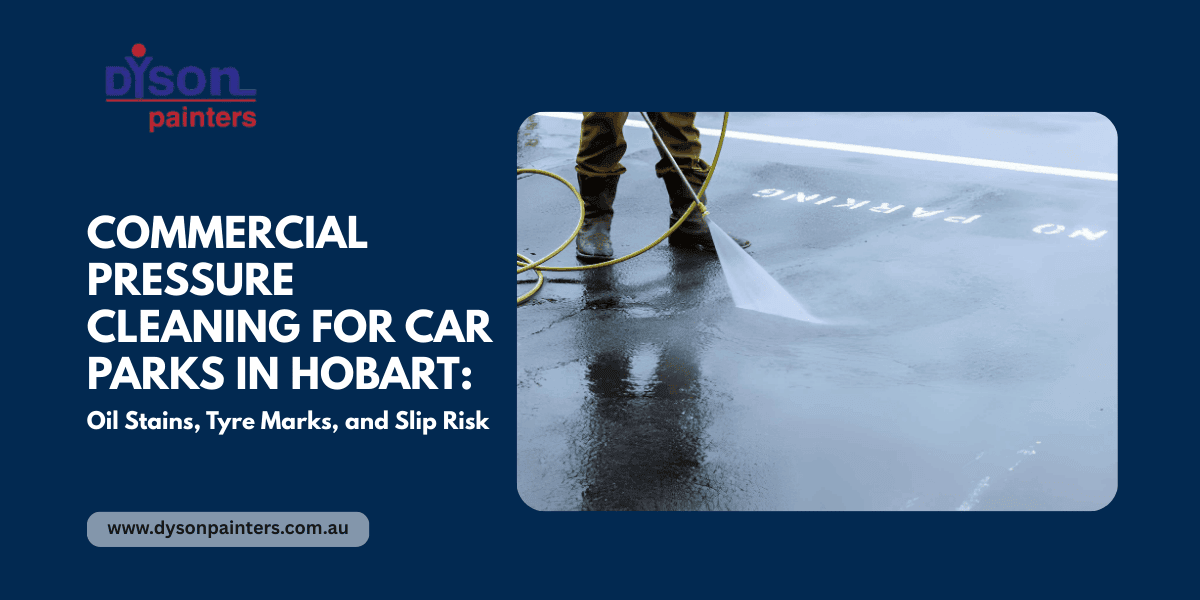
Car parks are essential components of any commercial property, and they receive high foot traffic every day. Whether it’s for a shopping centre, a corporate office building, or a medical facility, a car park serves as the first point of contact for visitors. As such, ensuring that these areas are well-maintained is crucial for both the aesthetics and safety of the property. One of the most effective ways to keep car parks clean and safe is commercial pressure cleaning.
In this comprehensive guide, we will explore how commercial pressure cleaning can help address common issues faced by car parks in Hobart, including oil stains, tyre marks, and slip risks. We’ll dive into the importance of regular pressure cleaning, the process itself, and how professional painting companies in Tasmania can help with post-cleaning touch-ups.
Why is Commercial Pressure Cleaning Essential for Car Parks?
Car parks are exposed to a variety of contaminants on a daily basis. These contaminants range from oil and tyre marks to organic growths like algae and moss, which can make the surface not only unsightly but also dangerous. Left unchecked, these substances can cause significant damage to the car park surface and create hazardous conditions that may result in accidents.
Commercial pressure cleaning plays a pivotal role in addressing these concerns by providing a deep clean that restores the surface’s appearance and ensures safety.
Key Benefits of Commercial Pressure Cleaning for Car Parks
- Improved Safety: Oil spills, tyre marks, and organic growth can create dangerous, slippery conditions. Pressure cleaning removes these hazards by lifting oils, dirt, and algae off the surface. This is particularly important in high-traffic car parks, where the chances of accidents are elevated. By removing these elements, you can reduce the risk of slip-and-fall injuries, ensuring that pedestrians and vehicles remain safe.
- Enhanced Aesthetic Appeal: An unkempt, stained car park can leave a bad first impression on visitors. Regular cleaning helps keep the car park looking fresh and well-maintained, which is essential for any commercial property. Pressure cleaning eliminates the most stubborn stains, restoring the surface’s cleanliness and enhancing the property’s overall curb appeal.
- Preserving the Surface Integrity: Regular cleaning with pressure washing helps preserve the structural integrity of the car park. Oil and grease stains, if left untreated, can seep deep into the concrete or asphalt, causing long-term damage. Pressure cleaning not only removes these stains but also helps prevent further degradation of the car park surface.
- Long-Term Cost Savings: Maintaining a clean and safe car park reduces the need for costly repairs in the future. When oil, dirt, and stains are cleaned regularly, the place is less likely to need resurfacing or other expensive maintenance. Regular pressure cleaning, therefore, becomes a wise investment, leading to significant savings over time.
- Regulatory Compliance: In Hobart, as in many other regions, commercial properties must comply with safety and environmental regulations. Car parks that are not appropriately maintained may face penalties or fines. Ensuring that your park is clean and free of hazards ensures that you meet local regulations and avoid any potential legal issues.
Common Problems in Car Parks That Require Commercial Pressure Cleaning
Car parks are subject to various types of contamination due to heavy vehicle traffic, weather conditions, and environmental factors. Some of the most common issues faced by commercial car parks include:
1. Oil Stains
Oil stains are a common problem in car parks, particularly in areas where vehicles are parked for long periods. Oil leaks often cause these stains, spills from engines, or routine maintenance activities. Over time, oil can seep into the concrete, creating unsightly stains and potentially weakening the surface of the car park.
Why Oil Stains are Problematic: Oil not only tarnishes the aesthetic appeal of the car park but also creates slip hazards. Wet oil can make the surface slippery, increasing the risk of accidents. Additionally, if oil is left untreated for extended periods, it can lead to irreversible damage to the concrete or asphalt surface.
How Commercial Pressure Cleaning Helps: Pressure cleaning uses high-pressure water combined with powerful detergents that break down oil and grease. These cleaning agents loosen and lift the oil, making it easier to wash away with the pressurised water. This process ensures that the oil stains are removed without causing further damage to the surface.
Request a Free Cleaning Estimate!
2. Tyre Marks
Tyre marks are another common issue in car parks, especially in high-traffic areas. These marks are often caused by vehicles making sharp turns or accelerating quickly in confined spaces. Over time, these marks accumulate, making the car park look neglected.
Why Tyre Marks are a Concern: While tyre marks are often seen as a cosmetic issue, they can also pose safety risks. When combined with oil or water, tyre marks can make the surface slippery, further increasing the risk of slips and falls. Additionally, these marks can be challenging to remove without the right tools and cleaning methods.
How Commercial Pressure Cleaning Helps: Pressure washing is highly effective in removing tyre marks. The forceful water jets, combined with special detergents, can penetrate the marks and break them down, ensuring that they are entirely removed. This process restores the car park’s appearance and reduces the likelihood of accidents.
3. Moss, Algae, and Organic Growth
In Hobart’s climate, car parks, particularly those with shaded areas, are prone to the growth of moss, algae, and other organic materials. These growths can make the surface slippery, increasing the risk of falls and accidents. Organic growth can also make the car park look old and dirty.
Why Moss and Algae are Problematic: Moss and algae create slippery conditions, particularly in areas where water collects, such as around drains or low points in the car park. This can be a serious slip-and-fall hazard, especially during rainy or damp weather.
How Commercial Pressure Cleaning Helps: Pressure cleaning effectively removes moss, algae, and other organic growths. The high-pressure water stream penetrates the growth, breaking it down and washing it away. Additionally, pressure washing helps prevent future growth by removing spores and debris that encourage moss and algae formation.
The Process of Commercial Pressure Cleaning for Car Parks
To achieve the best results, a thorough and methodical approach is essential when pressure cleaning car parks. Here’s an outline of the steps involved in commercial pressure cleaning:
1. Inspection of the Area
Before beginning the cleaning process, a detailed inspection of the car park is conducted. This allows the cleaning team to identify areas with significant oil stains, tyre marks, moss, or other debris. It also helps determine if any specific treatment or cleaning solution is required.
2. Pre-Treatment of Stains
In cases of stubborn stains, such as oil or grease, pre-treatment with a cleaning agent may be necessary. These agents are applied to the stains and left to sit for a short period to break down the oils and grease, making them easier to remove.
3. Pressure Cleaning
Once the pre-treatment has had time to work, the pressure cleaning begins. High-pressure water jets are used to clean the surface, removing dirt, debris, tyre marks, oil stains, and other contaminants. The process is thorough, ensuring that the entire car park is cleaned, from the driveways to the parking spaces.
4. Post-Treatment (If Needed)
Some stains, such as deeply embedded oil, may require additional treatment after the initial pressure cleaning. This may involve applying a more potent cleaning agent or using specific techniques to target the stain more effectively.
5. Final Inspection and Drying
After the cleaning process is complete, the car park is thoroughly inspected to ensure all stains, grime, and organic growth have been removed. The area is then left to dry, and any remaining residue is cleared away.
Best Practices for Commercial Pressure Cleaning in Car Parks
While commercial pressure cleaning can work wonders for cleaning car parks, safety and efficiency must always be a top priority. Here are some best practices to ensure that the cleaning process is done correctly:
1. Timing and Traffic Management
Car parks are frequently used, so cleaning must be done at times when the least disruption is caused. Most cleaning is done during off-peak hours, such as overnight or early in the morning, when vehicle movement is minimal. Blocking off sections of the car park may also be necessary to ensure safety during cleaning.
2. Environmentally Friendly Detergents
To protect the environment and local water systems, it’s essential to use environmentally friendly detergents during the cleaning process. These cleaning agents break down oil and grease without causing harm to the surrounding ecosystem.
3. Safety Measures
To prevent accidents, appropriate signage and barriers should be used to warn pedestrians and vehicles of the cleaning process. Additionally, workers must wear protective gear to avoid injury while operating the high-pressure cleaning equipment.
4. Use of Non-Slip Coatings
After cleaning, consider applying a non-slip coating to the surface to further reduce the risk of slips, especially in high-traffic areas. These coatings are particularly useful for areas that tend to remain wet, such as around drains or shaded sections of the car park.
The Role of Painting Companies in Tasmania After Pressure Cleaning
Once the car park has been pressure cleaned, it may require repainting or touch-ups to restore its appearance. Painting companies in Tasmania can provide essential post-cleaning services, including repainting line markings, curbs, and any other areas that require a fresh coat of paint.
Why Work with Painting Companies in Tasmania?
- Expertise in Commercial Properties: Painting companies in Tasmania specialise in the maintenance of commercial properties and understand the specific requirements of car park surfaces.
- Durable and Long-Lasting Solutions: These professionals use high-quality paints and coatings designed to withstand the heavy wear and tear of commercial car parks. This ensures that the paint remains intact and visible for an extended period.
- Regulatory Compliance: Professional painting companies ensure that line markings, symbols, and other markings comply with local regulations, ensuring the car park remains up to code.
Conclusion
Commercial pressure cleaning is essential for maintaining the safety and appearance of car parks in Hobart. By addressing common issues such as oil stains, tyre marks, and slip risks, pressure cleaning helps ensure that these spaces remain clean, safe, and attractive. Furthermore, working with painting companies in Tasmania for post-cleaning touch-ups guarantees that the car park maintains its functionality and aesthetics for years to come.
Investing in regular commercial pressure cleaning and working with professionals for follow-up painting ensures that your car park stays in optimal condition while promoting safety and compliance with local regulations.
Frequently Asked Questions
1. What is the cost of commercial pressure cleaning for car parks in Hobart?
The cost of commercial pressure cleaning depends on the car park size, the extent of staining, and the level of treatment required. It’s best to request a quote from local cleaning services for an accurate estimate.
2. How often should commercial car parks in Hobart be pressure cleaned?
Car parks should be pressure cleaned at least once every 3-6 months, or more frequently if they experience heavy traffic, oil spills, or organic growth, to ensure safety and appearance.
3. Can pressure cleaning remove old oil stains from concrete in car parks?
Yes, commercial pressure cleaning, combined with proper degreasers, can effectively remove old oil stains from concrete, restoring the surface and preventing further damage.
4. What safety precautions should be taken during pressure cleaning of car parks?
Safety measures include blocking off cleaning areas, using appropriate signage, ensuring workers wear protective gear, and scheduling cleaning during off-peak hours to avoid accidents.
5. Can painting companies in Tasmania help with post-pressure cleaning touch-ups for car parks?
Yes, painting companies in Tasmania can handle post-cleaning touch-ups, including repainting line markings and adding protective coatings to ensure durability and long-term functionality.
Keep Your Car Park Safe and Clean with Professional Pressure Cleaning
Is your car park showing signs of oil stains, tyre marks, or slippery surfaces? Don’t wait until the damage is done. Regular commercial pressure cleaning can prevent costly repairs, ensure safety, and improve the overall appearance of your property. Whether you manage a shopping centre, office building, or service station, our expert team at Dyson Painters is here to help you maintain a clean, hazard-free environment.
We specialise in removing tough stains like oil and tyre marks, as well as addressing slip risks from moss and algae. Our high-pressure cleaning techniques are tailored to meet the unique needs of car parks in Hobart, ensuring your property remains in top condition.
Contact us today at 0420-213-214 or email us at admin@dysonpainters.com.au to schedule a consultation or request a free quote. Let us help you keep your car park safe, clean, and compliant with local regulations!